
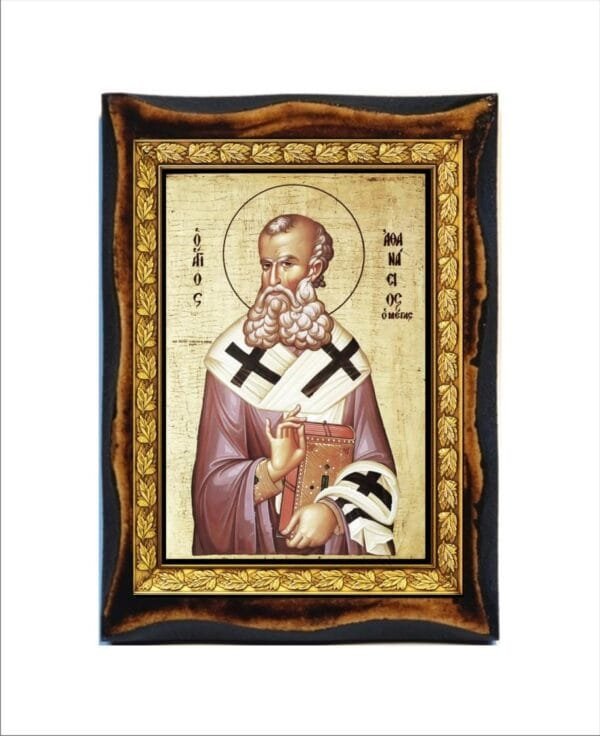

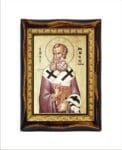

Athanasius of Alexandria
Our company offers wholesale sales for Monasteries, Exhibitions, Ecclesiastical Stores, Gift Shops, and Merchants. We provide competitive pricing based on the quantities you order, ensuring the best possible offer to meet your needs.
For more details on our products and to receive personalized offers, please contact us directly. We are happy to discuss terms and provide the best solutions tailored to you.
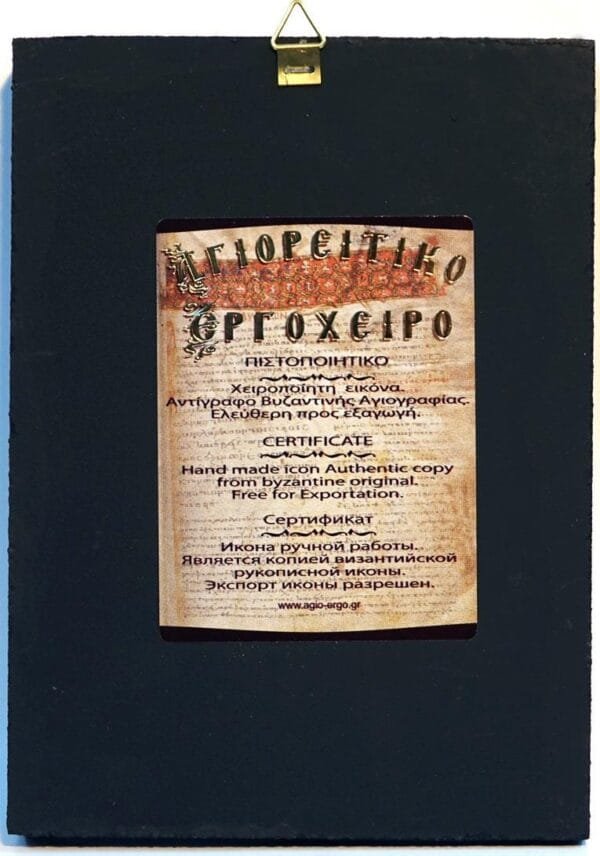
Saint Athanasius of Alexandria – Atanasio de Alejandría – Sankta Atanazio – Saint Athanase – Atanazy Wielki – Santo Atanásio – Sfântul Atanasie – Светац Атанасије – Handmade Wood
Dimensions: 11 x 8 cm – 4.33”x3.14”in , 15 x 11 cm – 5.9”x4.33”in , 21 x 15 cm – 8.3”x5.9”in , 27 x 21 cm – 10.6” X8.3”in – 42 x 32 cm – 16.5“x12.60”in
| Title | Range | Sale price |
|---|---|---|
| Total items | 5 - 10 | 15,20 € |
| Total items | 11 - 30 | 13,60 € |
| Total items | 31 - 60 | 12,00 € |
| Total items | 61 - 150 | 10,40 € |

Description
Prominent figure of the Christian Church, distinguished for his long and hard struggles in favor of the right faith and against the heresy of Arianism. For this reason it was named after the Megas church. His memory is celebrated every year on January 18 by the Orthodox Church and on May 2 by the Catholic Church. On this day Orthodoxy honors the collection of his remains. Athanasios was born in 295 in Alexandria to Christian parents. There is a legend, according to which, when he was still a child, he baptized pagan children on the beach, observing the holy rules.The local bishop Alexander, full of admiration for this spontaneous work of the young child, is said to have recognized all his baptisms as valid. He then took him under his protection and undertook his studies and general education. In time, Athanasios became the bishop’s secretary and at the age of 24 was ordained a deacon.When he began his religious activity, Alexandria was upset by the teaching of the local presbyter Arius, who taught that Christ was not a god, but a creation of God. For this reason, Constantine the Great convened the First Ecumenical Council in Nicaea in Bithynia in 325.The great battle of Orthodoxy took place there, with Athanasios as the protagonist. His oratorical acumen and unexpected militancy won the admiration of enemies and friends alike, and his fame spread to East and West.Athanasius became the symbol for the orthodox in their struggle against Arion’s malpractices and according to his teaching the first seven articles of the “Symbol of Faith” were drawn up.After three years, Bishop Alexander died, having nominated Alexander as his successor. Clergy and people proclaimed him Patriarch of Alexandria in 328, at the age of 33.Athanasius continues his struggle against Arianism, but high-ranking followers of Arius manage to exile him. In 337, after the death of Constantine the Great, he was recalled from exile and returned triumphant to Alexandria.But his enemies had not had their last word. They manage to exile him again, but in 346 he returned to the patriarchal throne of Alexandria. He was banished for the third time and took refuge in the desert, where he lived with dangers and great sufferings for six whole years.Julian restored him to Alexandria, but banished him again when he baptized the wives of pagan officials. For the fifth time he was exiled by the emperor Walis, but he himself reinstated him at the persistent demand of the people of Alexandria.Athanasios the Great was Patriarch of Alexandria for 46 years, 16 of which he spent in exile, sometimes in the West and sometimes in the desert. He fell asleep on May 2, 373, aged 78.
He wrote many works, speeches and letters, to refute the pagans and the Martians. He also wrote the biography of Antony the Great’s teacher and friend. Parts of his relics are in the Church of St. Zacharias in Venice and in the Coptic Church of St. Mark in Cairo.
Additional Information
| Weight | N/A |
|---|---|
| Dimensions | 11cm x 8cm x 1.2cm, 15cm x 11cm x 1.7cm, 21cm x 15cm x 1.7cm, 27cm x 21cm x 1.7cm, 42cm x 32cm x 1.7cm |
There are no question found.







Rating & Review
There are no reviews yet.