
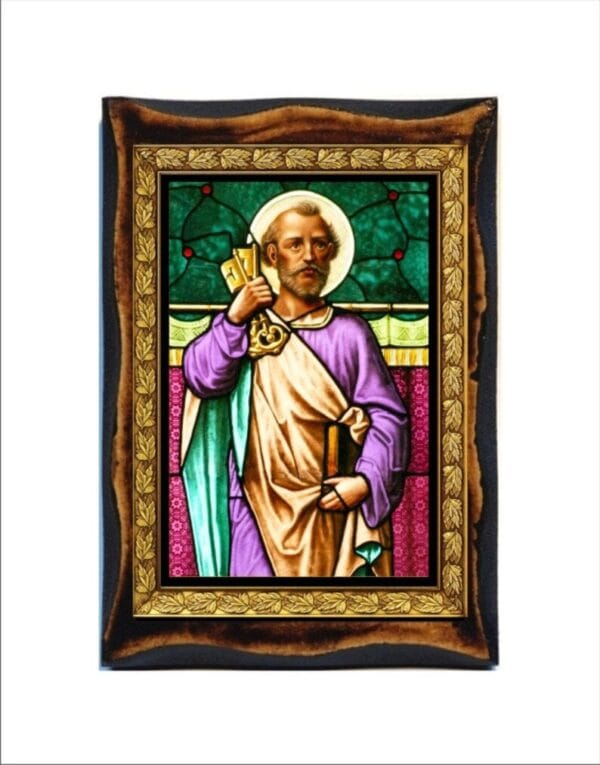



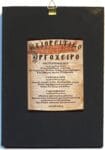
Apostle Peter
Our company offers wholesale sales for Monasteries, Exhibitions, Ecclesiastical Stores, Gift Shops, and Merchants. We provide competitive pricing based on the quantities you order, ensuring the best possible offer to meet your needs.
For more details on our products and to receive personalized offers, please contact us directly. We are happy to discuss terms and provide the best solutions tailored to you.
Saint Peter – Saint Pierre – Simon Pedro – San Pedro – Pietro Apostolo – Simon Petrus – San Pietro – Sao Pedro – Pierre apôtre
Dimensions: 11 x 8 cm – 4.33”x3.14”in , 15 x 11 cm – 5.9”x4.33”in , 21 x 15 cm – 8.3”x5.9”in , 27 x 21 cm – 10.6” X8.3”in – 42 x 32 cm – 16.5“x12.60”in
| Title | Range | Sale price |
|---|---|---|
| Total items | 5 - 10 | 15,20 € |
| Total items | 11 - 30 | 13,60 € |
| Total items | 31 - 60 | 12,00 € |
| Total items | 61 - 150 | 10,40 € |

Description
Saint Peter (Classical Syriac: ܫܸܡܥܘܿܢ ܟܹ݁ܐܦ݂ܵܐ, romanized: Šemʿōn Kēp̄ā; Hebrew: שמעון בר יונה, romanized: Šimʿōn bar Yōnāh; Greek: Πέτρος, translit. Petros; Coptic: Ⲡⲉⲧⲣⲟⲥ, romanized: Petros; Latin: Petrus; r. AD 30; died between AD 64 and 68), also known as Simon Peter, Simeon, Simon (/ˈsaɪmən/ (About this soundlisten)), Sham’un al-Safa, Cephas, or Peter the Apostle, was one of the Twelve Apostles of Jesus Christ, and the first leader of the early Church.
According to Christian tradition, Peter was crucified in Rome under Emperor Nero. He is traditionally counted as the first Bishop of Rome—or pope—and also by Eastern Christian tradition as the first Patriarch of Antioch. The ancient Christian churches all venerate Peter as a major saint and as the founder of the Church of Antioch and the Roman Church, but differ in their attitudes regarding the authority of his present-day successors (the primacy of the Bishop of Rome). According to Catholic teaching, in Matthew 16:18 Jesus promised Peter a special position in the Church.
Two general epistles in the New Testament are ascribed to Peter, but modern scholars generally reject the Petrine authorship of both.
The Gospel of Mark was traditionally thought to show the influence of Peter’s preaching and eyewitness memories. Several other books bearing his name—the Acts of Peter, Gospel of Peter, Preaching of Peter, Apocalypse of Peter, and Judgment of Peter—are considered by Christian denominations as apocryphal, and are thus not included in their Bible canons.
Peter’s original name, as indicated in the New Testament, was “Simon” (Σίμων Simōn in Greek) or (only in Acts 15:14 and 2 Peter 1:1) “Simeon” (Συμεών in Greek). The Simon/Simeon variation has been explained as reflecting “the well-known custom among Jews at the time of giving the name of a famous patriarch or personage of the Old Testament to a male child along with a similar sounding Greek/Roman name”.
He was later given the name כֵּיפָא (Kepha) in Aramaic, which was rendered in Greek (by transliteration and the addition of a final sigma to make it a masculine word) as Κηφᾶς, whence Latin and English Cephas (9 occurrences in the New Testament); or (by translation with masculine termination) as Πέτρος, whence Latin Petrus and English Peter (156 occurrences in the New Testament).
The precise meaning of the Aramaic word is disputed, some saying that its usual meaning is “rock” or “crag”, others saying that it means rather “stone” and, particularly in its application by Jesus to Simon, “precious stone” or “jewel”, but most scholars agree that as a proper name it denotes a rough or tough character. Both meanings, “stone” (jewel or hewn stone) and “rock”, are indicated in dictionaries of Aramaic and Syriac. Catholic theologian Rudolf Pesch argues that the Aramaic cepha means “stone, ball, clump, clew” and that “rock” is only a connotation; that in the Attic Greek petra denotes “grown rock, rocky range, cliff, grotto”; and that petros means “small stone, firestone, sling stone, moving boulder”.
Additional Information
| Weight | N/A |
|---|---|
| Dimensions | 11cm x 8cm x 1.2cm, 15cm x 11cm x 1.7cm, 21cm x 15cm x 1.7cm, 27cm x 21cm x 1.7cm, 42cm x 32cm x 1.7cm |
There are no question found.


Rating & Review
There are no reviews yet.