





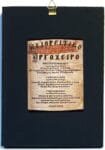
Aloysius de Gonzaga
Our company offers wholesale sales for Monasteries, Exhibitions, Ecclesiastical Stores, Gift Shops, and Merchants. We provide competitive pricing based on the quantities you order, ensuring the best possible offer to meet your needs.
For more details on our products and to receive personalized offers, please contact us directly. We are happy to discuss terms and provide the best solutions tailored to you.
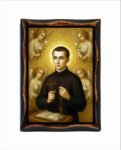
Saint Aloysius de Gonzaga – Aloisius von Gonzaga – San Luis Gonzaga – Louis de Gonzague – San Luigi Gonzaga – Alojzy Gonzaga – Aloysius Gonzaga
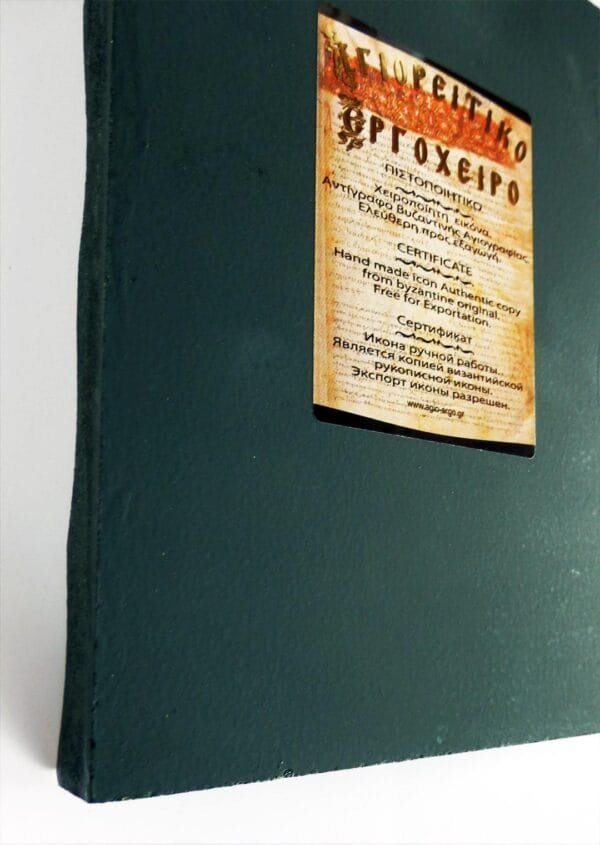
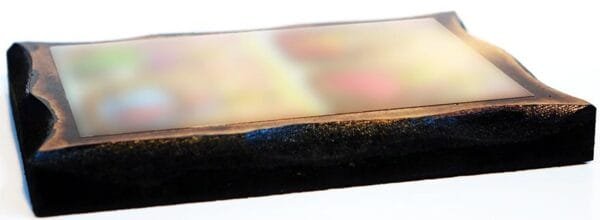
Dimensions: 11 x 8 cm – 4.33”x3.14”in , 15 x 11 cm – 5.9”x4.33”in , 21 x 15 cm – 8.3”x5.9”in , 27 x 21 cm – 10.6” X8.3”in – 42 x 32 cm – 16.5“x12.60”in
| Title | Range | Sale price |
|---|---|---|
| Total items | 5 - 10 | 15,20 € |
| Total items | 11 - 30 | 13,60 € |
| Total items | 31 - 60 | 12,00 € |
| Total items | 61 - 150 | 10,40 € |

Description
Aloysius de Gonzaga, SJ (Italian: Luigi Gonzaga; 9 March 1568 – 21 June 1591) was an Italian aristocrat who became a member of the Society of Jesus. While still a student at the Roman College, he died as a result of caring for the victims of a serious epidemic. He was beatified in 1605 and canonized in 1726.
Gonzaga was born the eldest of eight children, at his family’s castle in Castiglione delle Stiviere, between Brescia and Mantua in northern Italy in what was then part of the Duchy of Mantua, into a cadet branch of the illustrious House of Gonzaga. “Aloysius” is the Latin form of his given name in Italian, “Luigi”. Gonzaga was the son of Ferrante Gonzaga, Marquess of Castiglione, and Dona Marta Tana di Santena, daughter of a baron of the Piedmontese Della Rovere family. His mother was a lady-in-waiting to Isabel, the wife of Philip II of Spain.As the first-born son, he was in line to inherit his father’s title and status of Marquis. His father assumed that Gonzaga would become a soldier, as that was the norm for sons of the aristocracy and the family was often involved in the minor wars of the period. As early as age four, Luigi was given a set of miniature guns and accompanied his father on training expeditions so that the boy might learn “the art of arms”. At age five, Gonzaga was sent to a military camp to get started on his training. His father was pleased to see his son marching around camp at the head of a platoon of soldiers. His mother and his tutor were less pleased with the vocabulary he picked up there.
He grew up amid the violence and intrigue of Renaissance Italy. In 1576, at age 8, he was sent to Florence along with his younger brother, Rodolfo, to serve at the court of the Grand Duke Francesco I de’ Medici and to receive further education. While there, he fell ill with a disease of the kidneys, which troubled him throughout his life. While he was ill, he took the opportunity to read about the saints and to spend much of his time in prayer. In November 1579, the brothers were sent to the Duke of Mantua. Gonzaga was shocked by the violent and frivolous lifestyle he encountered there. Gonzaga returned to Castiglione where he met Cardinal Charles Borromeo, and from him received First Communion on 22 July 1580. After reading a book about Jesuit missionaries in India, Gonzaga felt strongly that he wanted to become a missionary. He started practicing by teaching catechism classes to young boys in Castiglione in the summers. He also repeatedly visited the houses of the Capuchin friars and the Barnabites located in Casale Monferrato, the capital of the Gonzaga-ruled Duchy of Montferrat where the family spent the winter. He also adopted an ascetic lifestyle. The family was called to Spain in 1581 to assist Maria of Austria, Holy Roman Empress. They arrived in Madrid in March 1582, where Gonzaga and Rodolfo became pages for the young Infante Diego. Gonzaga started thinking in earnest about joining a religious order. He had considered joining the Capuchins, but he had a Jesuit confessor in Madrid and decided instead to join that order. His mother agreed to his request, but his father was furious and prevented him from doing so.In July 1584, a year and a half after the Infante’s death, the family returned to Italy. Gonzaga still wanted to become a priest, but several members of his family worked hard to persuade him to change his mind. When they realized there was no way to make him give up his plan, they tried to persuade him to become a secular priest and offered to arrange for a bishopric for him. If he were to become a Jesuit he would renounce any right to his inheritance or status in society. His family’s attempts to dissuade him failed; Gonzaga was not interested in higher office and still wanted to become a missionary. In November 1585, Gonzaga gave up all rights of inheritance, which was confirmed by the emperor. He went to Rome and, because of his noble birth, gained an audience with Pope Sixtus V. Following a brief stay at the Palazzo Aragona Gonzaga, the Roman home of his cousin, Cardinal Scipione Gonzaga, on 25 November 1585 he was accepted into the Society of Jesus in Rome. During this period, he was asked to moderate his asceticism somewhat and to be more social with the other novices. Gonzaga’s health continued to cause problems. He was sent to Milan for studies, but was sent back to Rome after some time because of his health. On 25 November 1587, he took the three religious vows of chastity, poverty and obedience. In February and March 1588, he received minor orders and started studying theology to prepare for ordination. In 1589, he was called to Mantua to mediate between his brother Rodolfo and the Duke of Mantua. He returned to Rome in May 1590. It is said that, later that year, he had a vision in which the Archangel Gabriel told him that he would die within a year. In 1591, a plague broke out in Rome. The Jesuits opened a hospital for the stricken, and Gonzaga volunteered to work there. After begging alms for the victims, Gonzaga began working with the sick, carrying the dying from the streets into a hospital founded by the Jesuits. There he washed and fed the plague victims, preparing them as best he could to receive the sacraments. But though he threw himself into his tasks, he privately confessed to his spiritual director, Robert Bellarmine, that his constitution was revolted by the sights and smells of the work; he had to work hard to overcome his physical repulsion. At the time, many of the younger Jesuits had become infected with the disease, and so Gonzaga’s superiors forbade him from returning to the hospital. But Gonzaga long accustomed to refusals from his father persisted and requested permission to return, which was granted. Eventually he was allowed to care for the sick, but only at another hospital, called Our Lady of Consolation, where those with contagious diseases were not admitted. While there, Gonzaga was infected. He grew ill and was bedridden by 3 March 1591, a few days before his 23rd birthday. Gonzaga declined for many weeks. It seemed certain that he would die in a short time, and he was given Extreme Unction. He spoke several times with his confessor, the cardinal and later saint, Robert Bellarmine. Gonzaga told several people that he would die on the Octave of the feast of Corpus Christi. On that day, 21 June 1591, as he began to grow weak, Bellarmine gave him the last rites. He died just before midnight.
Additional Information
| Weight | N/A |
|---|---|
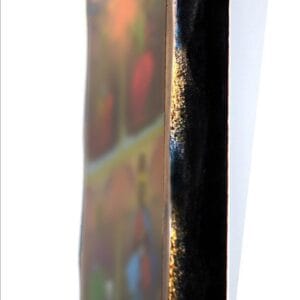
| Dimensions | 11cm x 8cm x 1.2cm, 15cm x 11cm x 1.7cm, 21cm x 15cm x 1.7cm, 27cm x 21cm x 1.7cm, 42cm x 32cm x 1.7cm |
There are no question found.
Related products


Birth of Holy Virgin
Seller




Rating & Review
There are no reviews yet.