
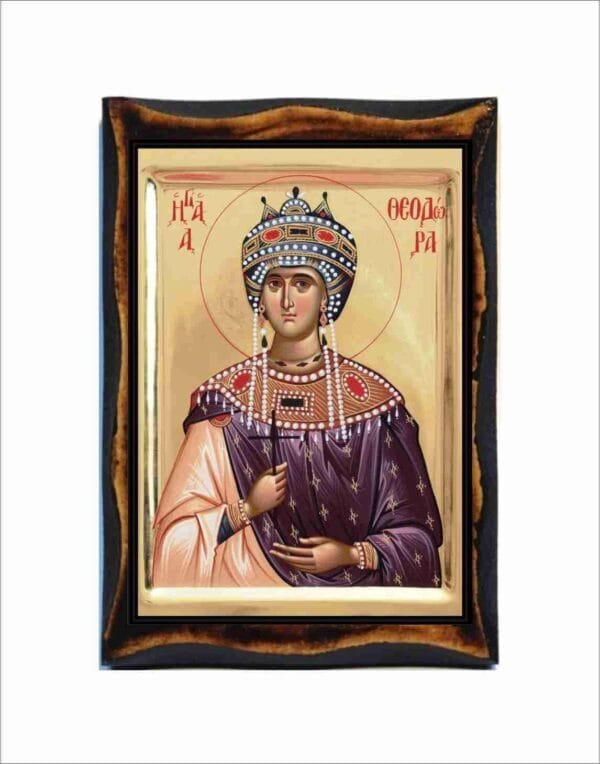

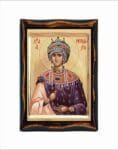

Saint Theodora
Our company offers wholesale sales for Monasteries, Exhibitions, Ecclesiastical Stores, Gift Shops, and Merchants. We provide competitive pricing based on the quantities you order, ensuring the best possible offer to meet your needs.
For more details on our products and to receive personalized offers, please contact us directly. We are happy to discuss terms and provide the best solutions tailored to you.
Theodora Byzantine Empress – Theodora Augusta – Teodora – Théodora – Santa Teodora – Theodora I – Theodora I – Teodora Augusta
Dimensions: 11 x 8 cm – 4.33”x3.14”in , 15 x 11 cm – 5.9”x4.33”in , 21 x 15 cm – 8.3”x5.9”in , 27 x 21 cm – 10.6” X8.3”in – 42 x 32 cm – 16.5“x12.60”in
| Title | Range | Sale price |
|---|---|---|
| Total items | 5 - 10 | 15,20 € |
| Total items | 11 - 30 | 13,60 € |
| Total items | 31 - 60 | 12,00 € |
| Total items | 61 - 150 | 10,40 € |

Description
Theodora (/ˌθiːəˈdɔːrə/; Greek: Θεοδώρα; c. 500 – 28 June 548) was a Byzantine empress by marriage to emperor Justinian. She became empress upon Justinian’s accession in 527 and was one of his chief advisers, albeit from humble origins. Along with her spouse, Theodora is a saint in the Eastern Orthodox Church and in the Oriental Orthodox Church, commemorated on 14 November and 28 June respectively. She is sometimes enumerated as Theodora I.
The main historical sources for her life are the works of her contemporary Procopius. The historian offered three different portrayals of the empress. The Wars of Justinian, largely completed in 545, paints a picture of a courageous and influential empress who saved the throne for Justinian.
Later, he wrote the Secret History. The work has sometimes been interpreted as representing a deep disillusionment with the emperor Justinian, the empress, and even his patron Belisarius. Justinian is depicted as cruel, venal, prodigal, demonic and incompetent; as for Theodora, the reader is given a detailed portrayal of vulgarity and underage sex, combined with shrewish and calculating mean-spiritedness. Alternatively, scholars versed in political rhetoric of the era have viewed these statements from the Secret History as formulaic expressions within the tradition of invective.
Procopius’ Buildings of Justinian, written probably after Secret History, is a panegyric which paints Justinian and Theodora as a pious couple and presents particularly flattering portrayals of them. Besides her piety, her beauty is praised within the conventional language of the text’s rhetorical form. Although Theodora was dead when this work was published, Justinian was alive, and perhaps commissioned the work.
Her contemporary John of Ephesus writes about Theodora in his Lives of the Eastern Saints and mentions an illegitimate daughter. Theophanes the Confessor mentions some familial relations of Theodora to figures not mentioned by Procopius. Victor Tonnennensis notes her familial relation to the next empress, Sophia.
Michael the Syrian, the Chronicle of 1234 and Bar-Hebraeus place her origin in the city of Daman, near Kallinikos, Syria. They make an alternate account compared to Procopius by making Theodora the daughter of a priest, trained in the pious practices of Miaphysitism since birth. These are late Miaphysite sources and record her depiction among members of their creed. The Miaphysites have a tendency to regard Theodora as one of their own. Their account is also an alternative to what is told by the contemporary John of Ephesus. Many modern scholars prefer Procopius’ account
Additional Information
| Weight | N/A |
|---|---|
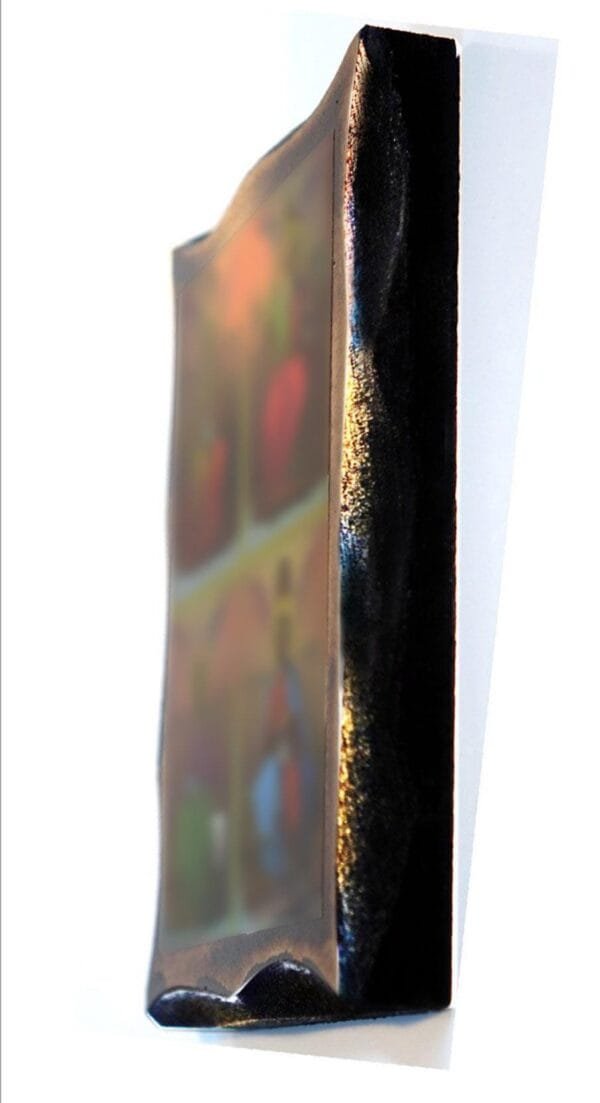
| Dimensions | 11cm x 8cm x 1.2cm, 15cm x 11cm x 1.7cm, 21cm x 15cm x 1.7cm, 27cm x 21cm x 1.7cm, 42cm x 32cm x 1.7cm |
There are no question found.


Rating & Review
There are no reviews yet.