
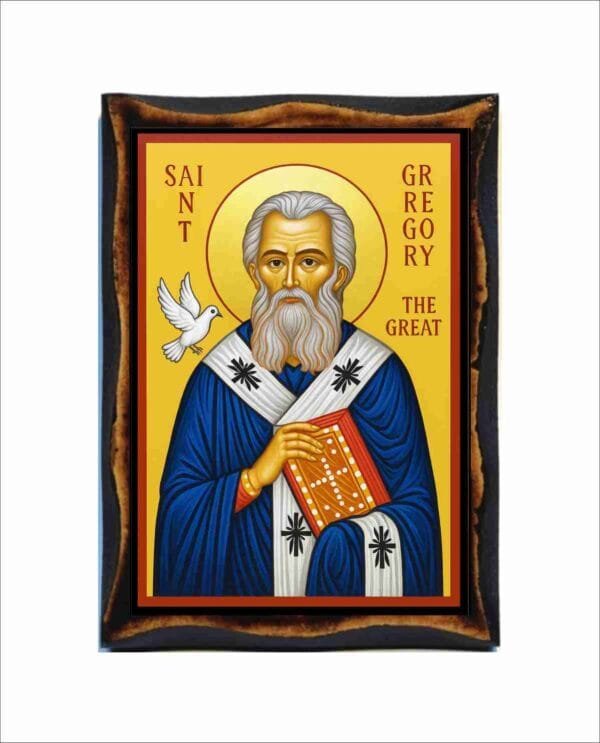
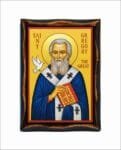
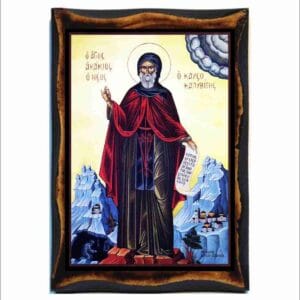
Gregory the Dialogist
Our company offers wholesale sales for Monasteries, Exhibitions, Ecclesiastical Stores, Gift Shops, and Merchants. We provide competitive pricing based on the quantities you order, ensuring the best possible offer to meet your needs.
For more details on our products and to receive personalized offers, please contact us directly. We are happy to discuss terms and provide the best solutions tailored to you.
Gregory the Great – Saint Gregory – Gregory the Dialogist – Saint Gregory Dialogus, Pope of Rome – Gregory Dialogos
11cm x 8cm x 1.2cm | 15cm x 11cm x 1.7cm | 21cm x 15cm x 1.7cm | 27cm x 21cm x 1.7cm | 42cm x 32cm x 1.7cm
| Title | Range | Sale price |
|---|---|---|
| Total items | 5 - 10 | 15,20 € |
| Total items | 11 - 30 | 13,60 € |
| Total items | 31 - 60 | 12,00 € |
| Total items | 61 - 150 | 10,40 € |

Description
St. Gregory’s family had large land holdings in Italy, which St. Gregory sold to help the poor following his father’s death. After turning his home into a monastery named for St. Andrew, Pope Pelagius II appointed him as an ambassador to Constantinople; however, Gregory disliked the worldly atmosphere of the court and never learned Greek.
After his consecration as Bishop of Rome on September 3, 590, he negotiated a peace with the Lombards, who besieged Rome, and he dispatched St. Augustine of Canterbury to evangelize Britain.
He is known in the East as Gregory the Dialogist for his four-volume Dialogues, in which he wrote of the lives and miracles of the saints of Italy and of the afterlife. It is the primary source of the lives of St. Benedict of Nursia and his sister Scholastica. His other writings include the Moralia on Job, a commentary on the Book of Job; his Homilies on Ezekiel; the Pastoral Rule, which served as the prime manual for priests in the West for many years; and a great number of other sermons.
He added the commemoration of the Apostle Andrew to the embolism on the Lord’s Prayer in the ancient Roman Mass; as a result, the Roman Mass is often called the Mass of St. Gregory, especially among a number of Orthodox. He was a patron of ancient Western chant, often called “Gregorian chant” for his patronage. In the East, the Liturgy of the Presanctified Gifts celebrated during Lent commemorates St. Gregory as its author, although it is unclear what role he played in its development.
St. Gregory reposed on March 12, 604.
Additional Information
| Weight | N/A |
|---|---|
| Dimensions | 11cm x 8cm x 1.2cm, 15cm x 11cm x 1.7cm, 21cm x 15cm x 1.7cm, 27cm x 21cm x 1.7cm, 42cm x 32cm x 1.7cm |
There are no question found.




Rating & Review
There are no reviews yet.