
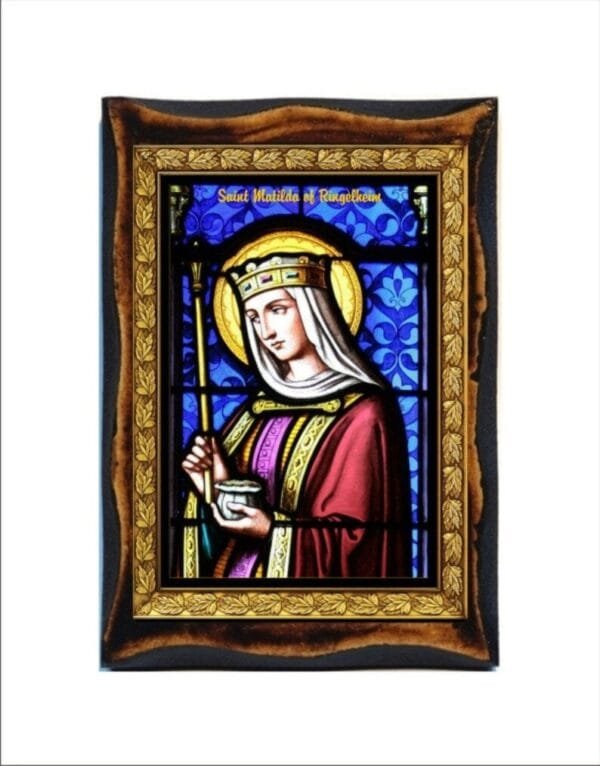


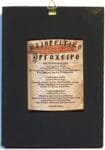
Matilda of Ringelheim
Our company offers wholesale sales for Monasteries, Exhibitions, Ecclesiastical Stores, Gift Shops, and Merchants. We provide competitive pricing based on the quantities you order, ensuring the best possible offer to meet your needs.
For more details on our products and to receive personalized offers, please contact us directly. We are happy to discuss terms and provide the best solutions tailored to you.
Mathilde de Ringelheim – Matilde di Ringelheim – Matilde de Ringelheim – Matylda von Ringelheim – Heilige Mathilde
| Title | Range | Sale price |
|---|---|---|
| Total items | 5 - 10 | 15,20 € |
| Total items | 11 - 30 | 13,60 € |
| Total items | 31 - 60 | 12,00 € |
| Total items | 61 - 150 | 10,40 € |

Description
Saint Matilda (c. 894/97 – 14 March 968) was Duchess of Saxony from 912 and German queen (Queen of the Franks) from 919 by her marriage with Henry the Fowler, the first king of the Ottonian dynasty. Upon her husband’s death in 936, she founded Quedlinburg Abbey to commemorate the late king. Matilda lived to see Western Imperial rule restored when her eldest son Otto was crowned Holy Roman Emperor in 962. Her surname refers to Ringelheim, where her comital Immedinger relatives established a nunnery about 940.
hagiographies: the Vita antiquior, written about 974, and Vita posterior, circa 1003.
Matilda was born in Enger near Herford, in the Westphalian part of the German stem duchy of Saxony. She was the daughter of the local count Dietrich and his wife Reinhild, a noblewoman of Danish and Frisian descent. Matilda’s biographers traced her ancestry back to the legendary Saxon leader Widukind (c. 730 – 807), who presumably was buried in the Enger church. Her sister Frederuna married Count Wichmann the Elder, a member of the Billung dynasty.
As a young girl she was sent to Herford Abbey, where her grandmother Matilda was abbess and where her reputation for beauty and virtue –and possibly also her extensive Westphalian dowry– is said to have attracted the attention of the Saxon duke Otto the Illustrious, who betrothed her to his son and heir, Henry, about 20 years her senior. By the conjugal union, the Ottonian dynasty (Liudolfings) considerably enlarged their possessions in the western parts of Saxony. Henry’s previous marriage with Hatheburg of Merseburg was annulled. They were married at the Pfalz of Wallhausen in 909 (or 913).
After Henry’s death 936 in Memleben, he was buried in Quedlinburg, where Queen Mathilde founded a convent the same year. She lived there during the following years and took care of the family’s memorialization. Thus Quedlinburg Abbey became the most important center of prayer and commemoration of the dead in the East-Franconian Empire.[9] Like in other convents, daughters of noble families where raised in Quedlinburg, to later become Abesses in order to secure the families influence. One of them was her own granddaughter Matilda, daughter of Otto I and Adelheid of Burgundy, to whom she passed on the conducting of the convent in 966, after 30 years of leadership. The younger Mathilde therefore became the first abbess of the convent in Quedlinburg. With her other goods, Queen Mathilde founded further convents, one of them in 947 in Enger . Her last foundation was the convent of Nordhausen in 961.
Mathilde’s handling of her dowry, which she had received from King Henry I previous to his death, was subject to a dispute between her and Otto I during the years 936-946. Otto made a claim on his mother’s possessions, which eventually led to her fleeing into exile. Otto’s wife, Queen Eadgyth, is said to have brought about the reconciliation in which Mathilde left her goods and Otto was forgiven for his actions.
The exact circumstances of this feud are still controversial to this day, but in order to protect her goods, Mathilde acquired papal privileges for all monasteries in eastern Saxony in the period before her death in early 968. However, these efforts were ignored when Theophanu, the wife of Otto II, received Mathilde’s dowry after she died.
Additional Information
| Weight | N/A |
|---|---|
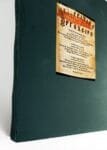
| Dimensions | 11cm x 8cm x 1.2, 15cm x 11cm x 1.7, 21cm x 15cm x 1.7, 27cm x 21cm x 1.7, 42cm x 32cm x 1.7 |
There are no question found.






Rating & Review
There are no reviews yet.