

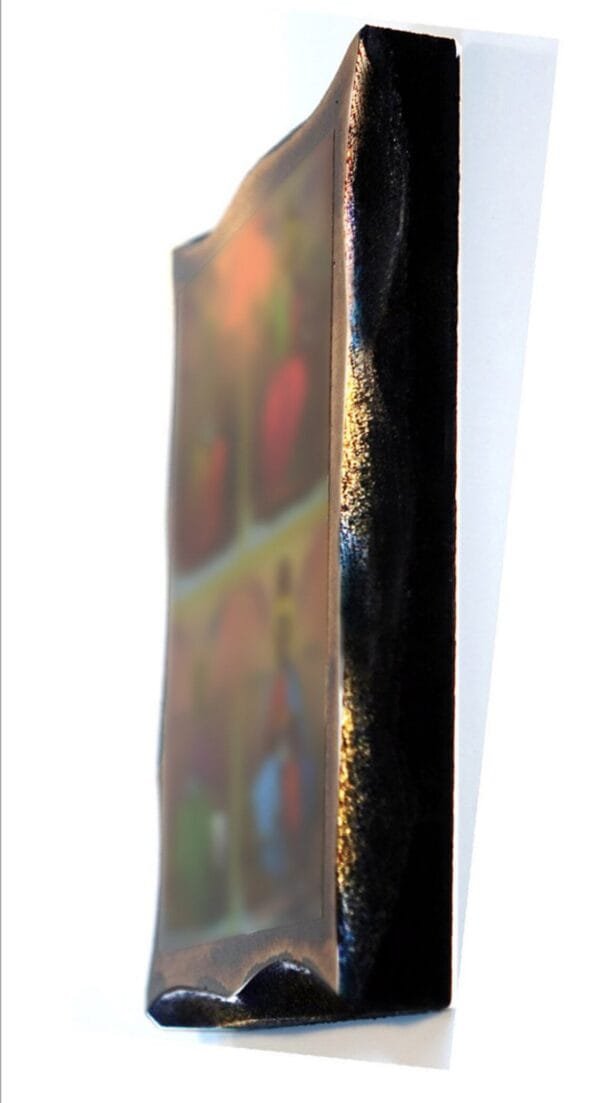


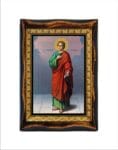
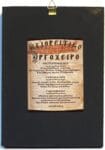
Philip the Apostle
Our company offers wholesale sales for Monasteries, Exhibitions, Ecclesiastical Stores, Gift Shops, and Merchants. We provide competitive pricing based on the quantities you order, ensuring the best possible offer to meet your needs.
For more details on our products and to receive personalized offers, please contact us directly. We are happy to discuss terms and provide the best solutions tailored to you.
Saint Philip – Saint Philippe – Felipe el Apostol – Filippo apostolo – Philippus – Filip Apostoł – Sao Filipe – Philip
Dimensions: 11 x 8 cm – 4.33”x3.14”in , 15 x 11 cm – 5.9”x4.33”in , 21 x 15 cm – 8.3”x5.9”in , 27 x 21 cm – 10.6” X8.3”in – 42 x 32 cm – 16.5“x12.60”in
| Title | Range | Sale price |
|---|---|---|
| Total items | 5 - 10 | 15,20 € |
| Total items | 11 - 30 | 13,60 € |
| Total items | 31 - 60 | 12,00 € |
| Total items | 61 - 150 | 10,40 € |

Description
Philip the Apostle (Greek: Φίλιππος, Philippos) was one of the Twelve Apostles of Jesus. Later Christian traditions describe Philip as the apostle who preached in Greece, Syria, and Phrygia.In the Roman Catholic Church, the feast day of Philip, along with that of James the Just, was traditionally observed on 1 May, the anniversary of the dedication of the church dedicated to them in Rome (now called the Church of the Twelve Apostles). The Eastern Orthodox Church celebrates Philip’s feast day on 14 November. One of the Gnostic codices discovered in the Nag Hammadi library in 1945 bears Philip’s name in its title, on the bottom line.
Accounts of Philip’s life and ministry exist in the extra-canonical writings of later Christians. However, some can be misleading, as many hagiographers conflated Philip the Apostle with Philip the Evangelist. The most notable and influential example of this is the hagiography of Eusebius, in which Eusebius clearly assumes that both Philips are the same person.[6] As early as 1260, Jacobus de Voragine noted in his Golden Legend that the account of Philip’s life given by Eusebius was not to be trusted.
An early extra-biblical story about St. Philip is preserved in the apocryphal Letter from Peter to Philip, one of the texts in the Nag Hammadi Library, and dated to the end of the 2nd century or early 3rd. This text begins with a letter from St Peter to Philip the apostle, asking him to rejoin the other apostles who had gathered at the Mount of Olives. Fred Lapham believes that this letter indicates an early tradition that “at some point between the Resurrection of Jesus and the final parting of his risen presence from the disciples, Philip had undertaken a sole missionary enterprise, and was, for some reason, reluctant to return to the rest of the Apostles.” This mission is in harmony with the later tradition that each disciple was given a specific missionary charge. Lapham explains the central section, a Gnostic dialogue between the risen Christ and his disciples, as a later insertion.
Statue of Philip in the Archbasilica of St. John Lateran by Giuseppe Mazzuoli
Later stories about Saint Philip’s life can be found in the anonymous Acts of Philip, probably written by a contemporary of Eusebius. This non-canonical book recounts the preaching and miracles of Philip. Following the resurrection of Jesus, Philip was sent with his sister Mariamne and Bartholomew to preach in Greece, Phrygia, and Syria. Included in the Acts of Philip is an appendix, entitled “Of the Journey of Philip the Apostle: From the Fifteenth Act Until the End, and Among Them the Martyrdom.” This appendix gives an account of Philip’s martyrdom in the city of Hierapolis. According to this account, through a miraculous healing and his preaching Philip converted the wife of the proconsul of the city. This enraged the proconsul, and he had Philip, Bartholomew, and Mariamne all tortured. Philip and Bartholomew were then crucified upside-down, and Philip preached from his cross. As a result of Philip’s preaching the crowd released Bartholomew from his cross, but Philip insisted that they not release him, and Philip died on the cross. Another legend is that he was martyred by beheading in the city of Hierapolis.
Nowadays relics of Philip the Apostle are in the crypt of Basilica Santi Apostoli, Rome.
Additional Information
| Weight | N/A |
|---|---|
| Dimensions | 11cm x 8cm x 1.2cm, 15cm x 11cm x 1.7cm, 21cm x 15cm x 1.7cm, 27cm x 21cm x 1.7cm, 42cm x 32cm x 1.7cm |
There are no question found.




Rating & Review
There are no reviews yet.