
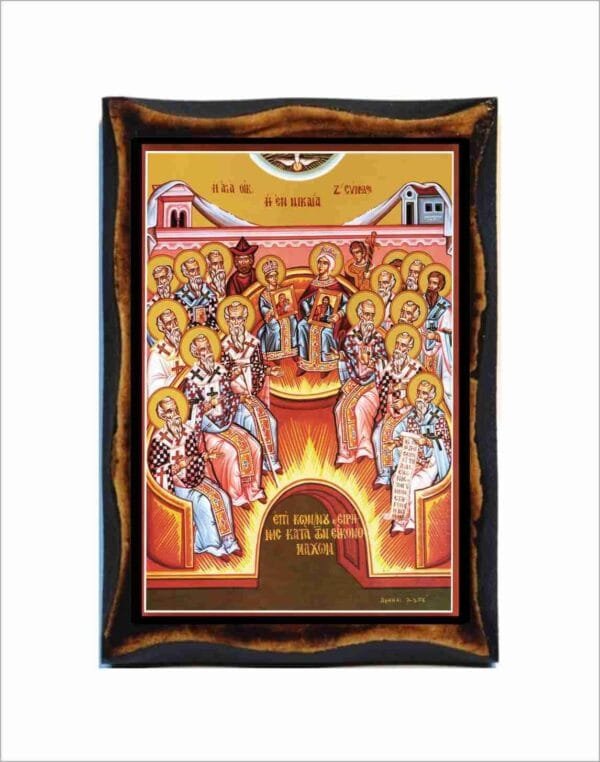
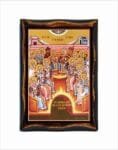
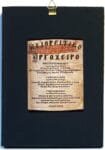
Seventh Ecumenical
Our company offers wholesale sales for Monasteries, Exhibitions, Ecclesiastical Stores, Gift Shops, and Merchants. We provide competitive pricing based on the quantities you order, ensuring the best possible offer to meet your needs.
For more details on our products and to receive personalized offers, please contact us directly. We are happy to discuss terms and provide the best solutions tailored to you.
Second Council of Nicaea – Septième Concile Œcuménique – Settimo Concilio Ecumenico – Siebtes Ökumenisches Konzil
Dimensions: 11 x 8 cm – 4.33”x3.14”in , 15 x 11 cm – 5.9”x4.33”in , 21 x 15 cm – 8.3”x5.9”in , 27 x 21 cm – 10.6” X8.3”in – 42 x 32 cm – 16.5“x12.60”in
| Title | Range | Sale price |
|---|---|---|
| Total items | 5 - 10 | 12,87 £ |
| Total items | 11 - 30 | 11,51 £ |
| Total items | 31 - 60 | 10,16 £ |
| Total items | 61 - 150 | 8,81 £ |

Description
The Seventh Ecumenical Council (also known as the Second Council of Nicaea) was held in the year 787 at the city of Nicaea (modern-day Iznik, Turkey). This council was convened to address a significant theological dispute regarding the veneration of icons, which had been a point of contention in the Eastern Church.
Historical Context:
The issue of iconoclasm (the rejection or destruction of religious images) had arisen earlier in the 8th century during the reign of the Byzantine Emperor Leo III, who sought to remove icons from churches, seeing their veneration as a form of idolatry. His son, Constantine V, continued these efforts, leading to the persecution of those who supported the use of icons. This period of iconoclasm lasted for several decades, with the Church divided on the issue.
The Seventh Ecumenical Council was convened by Empress Irene of Constantinople and her son, Emperor Constantine VI, to resolve the controversy and restore the use of icons in Christian worship. It was attended by bishops from the Eastern Church, although Western bishops were not present.
The Seventh Ecumenical Council was a critical moment in Church history, as it definitively settled the issue of iconoclasm and reaffirmed the place of religious images within the Christian tradition. Its decision to restore the veneration of icons remains a key tenet of Eastern Orthodox Christianity today. This council also reinforced the importance of the Incarnation in Christian theology, emphasizing that the divine and human could coexist in visible form without violating the principle of monotheism.
Additional Information
| Weight | N/A |
|---|---|
| Dimensions | 11cm x 8cm x 1.2cm, 15cm x 11cm x 1.7cm, 21cm x 15cm x 1.7cm, 27cm x 21cm x 1.7cm, 42cm x 32cm x 1.7cm |
There are no question found.




Rating & Review
There are no reviews yet.