
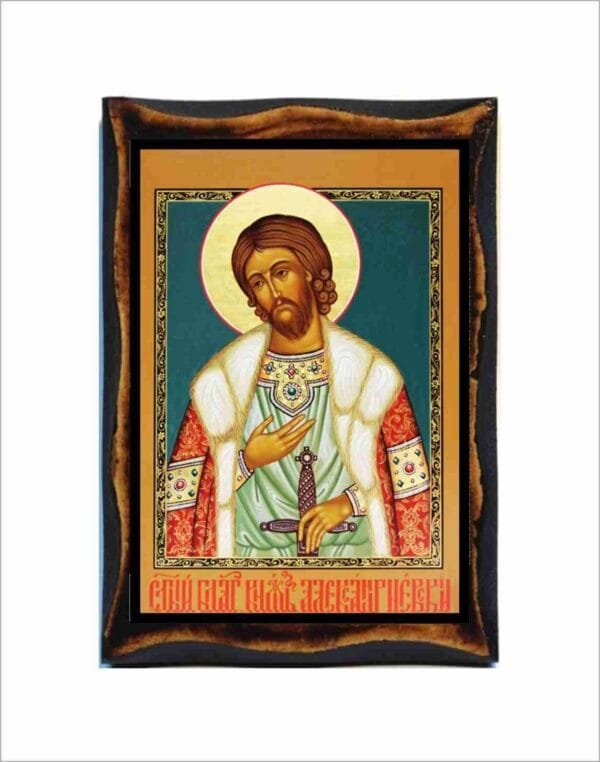
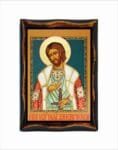

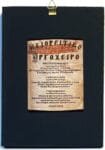
Alexander Nevsky
Our company offers wholesale sales for Monasteries, Exhibitions, Ecclesiastical Stores, Gift Shops, and Merchants. We provide competitive pricing based on the quantities you order, ensuring the best possible offer to meet your needs.
For more details on our products and to receive personalized offers, please contact us directly. We are happy to discuss terms and provide the best solutions tailored to you.
Alexander Nevsky – Aleksandr Nevskij – Alexandre Nevski – Alejandro Nevski – Alexander Jaroslawitsch Newski – Aleksandr Nevski – Aleksander Newski
Dimensions: 11 x 8 cm – 4.33”x3.14”in , 15 x 11 cm – 5.9”x4.33”in , 21 x 15 cm – 8.3”x5.9”in , 27 x 21 cm – 10.6” X8.3”in – 42 x 32 cm – 16.5“x12.60”in
| Title | Range | Sale price |
|---|---|---|
| Total items | 5 - 10 | 15,20 € |
| Total items | 11 - 30 | 13,60 € |
| Total items | 31 - 60 | 12,00 € |
| Total items | 61 - 150 | 10,40 € |

Description
Alexander Yaroslavich Nevsky (Russian: Александр Ярославич Невский; IPA: [ɐlʲɪˈksandr jɪrɐˈsɫavʲɪtɕ ˈnʲɛfskʲɪj] ⓘ; monastic name: Aleksiy; 13 May 1221 – 14 November 1263) was Prince of Novgorod (1236–1240; 1241–1256; 1258–1259), Grand Prince of Kiev (1249–1263), and Grand Prince of Vladimir (1252–1263).
Commonly regarded as a key figure in medieval Russian history, Alexander was a grandson of Vsevolod the Big Nest and rose to legendary status on account of his military victories in northwestern Russia over Swedish invaders in the 1240 Battle of the Neva,[a] as well as German crusaders in the 1242 Battle on the Ice. He preserved Eastern Orthodoxy, agreeing to pay tribute to the powerful Golden Horde. Metropolitan Macarius of Moscow canonized Alexander Nevsky as a saint of the Russian Orthodox Church in 1547.
In 1236, Alexander was appointed by the Novgorodians to become their prince (knyaz), where he had already served as his father’s governor in Novgorod. The Novgorod chronicle describes how Yaroslav left his son Alexander in Novgorod and took with him “senior Novgorodians” and a hundred men from Torzhok and “sat in Kiev upon the throne”.
In 1237, the Swedes received papal authorization to launch a crusade, and in 1240, new campaigns began in the easternmost part of the Baltic region. The Finnish mission’s eastward expansion led to a clash between Sweden and the city-state of Novgorod, since the Karelians had been allies and tributaries of Novgorod since the mid-12th century. The Swedish army was led by Birger Jarl and consisted of Norwegians and Finnish tribes. After a successful campaign into Tavastia, the Swedes advanced further east. According to Russian sources, the Swedish army landed at the confluence of the rivers Izhora and Neva, when Alexander and his small army suddenly attacked the Swedes on 15 July 1240 and defeated them in the Battle of the Neva.
Additional Information
| Weight | N/A |
|---|---|
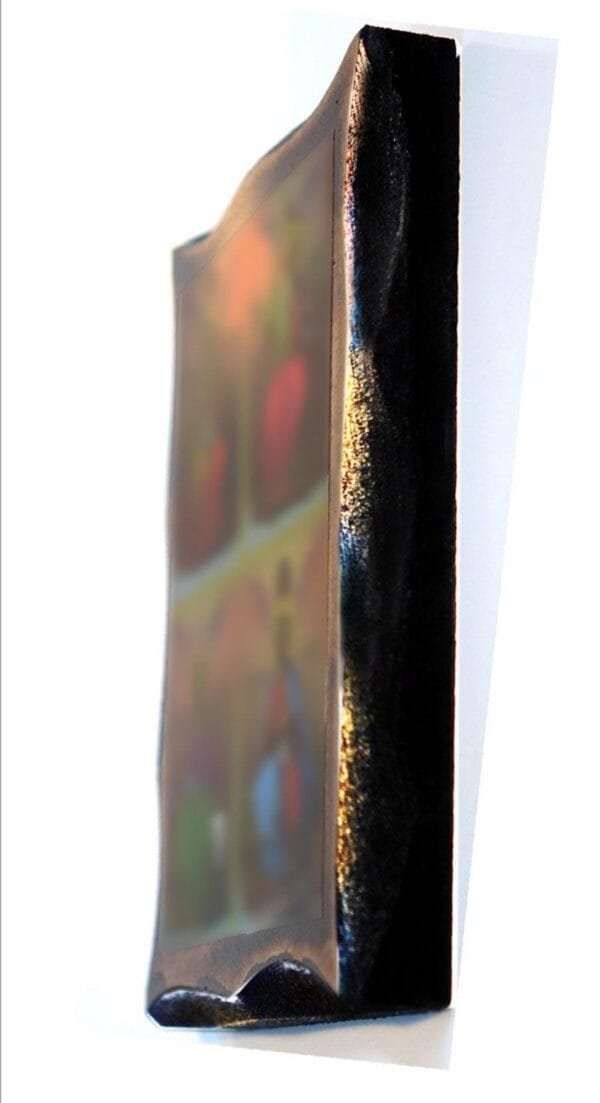
| Dimensions | 11cm x 8cm x 1.2cm, 15cm x 11cm x 1.7cm, 21cm x 15cm x 1.7cm, 27cm x 21cm x 1.7cm, 42cm x 32cm x 1.7cm |
There are no question found.
Related products

Saint Jerome


Saint Georgina


Saint Sophocles

Hezekiah King Judah
Seller


Rating & Review
There are no reviews yet.