






Benedict of Nursia
Our company offers wholesale sales for Monasteries, Exhibitions, Ecclesiastical Stores, Gift Shops, and Merchants. We provide competitive pricing based on the quantities you order, ensuring the best possible offer to meet your needs.
For more details on our products and to receive personalized offers, please contact us directly. We are happy to discuss terms and provide the best solutions tailored to you.
Benedetto da Norcia – Benoît de Nursie – Benito de Nursia – Bento de Núrsia – Benedikt von Nursia – Benedykt z Nursji
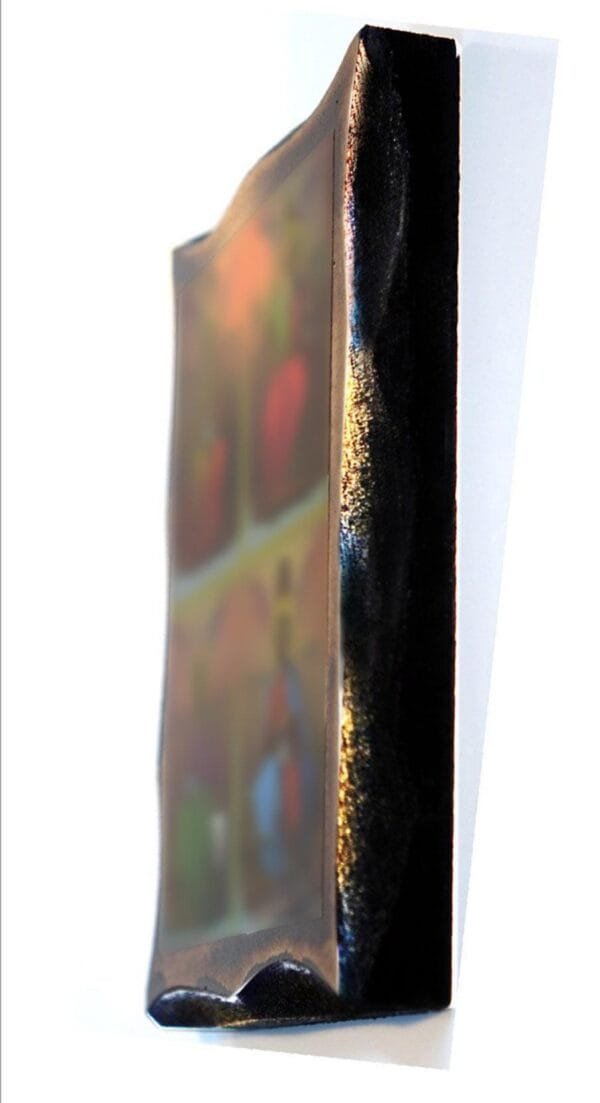
Dimensions: 11 x 8 cm – 4.33”x3.14”in , 15 x 11 cm – 5.9”x4.33”in , 21 x 15 cm – 8.3”x5.9”in , 27 x 21 cm – 10.6” X8.3”in – 42 x 32 cm – 16.5“x12.60”in
| Title | Range | Sale price |
|---|---|---|
| Total items | 5 - 10 | 15,20 € |
| Total items | 11 - 30 | 13,60 € |
| Total items | 31 - 60 | 12,00 € |
| Total items | 61 - 150 | 10,40 € |

Description
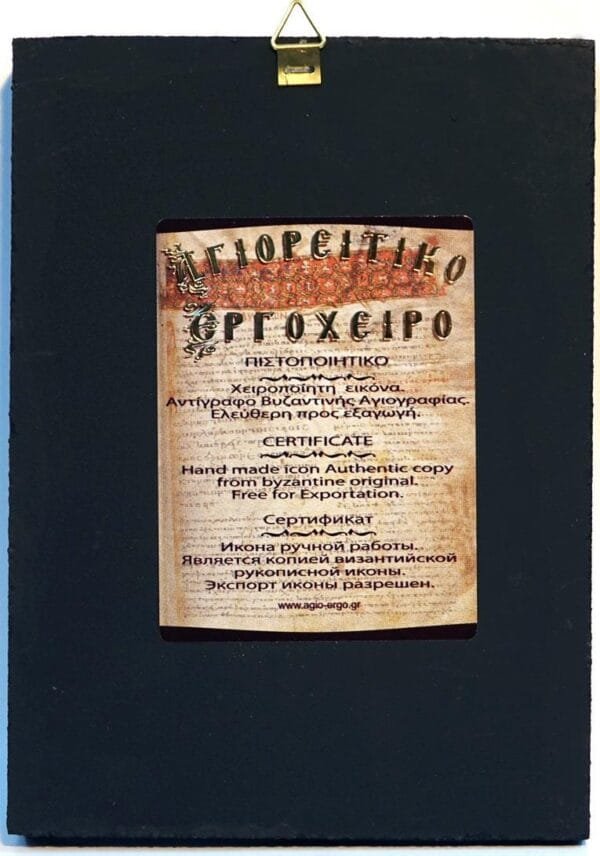
This Icon is a copy of the Hagiography (Holy Card Printing) that we have made in our Laboratory and we reserve the exclusive rights to reproduce these images, which are protected by copyright.
Benedict of Nursia (Latin: Benedictus Nursiae; Italian: Benedetto da Norcia; Vulgar Latin: *Benedecto; Gothic: Benedikt; c. 2 March 480 – c. 543 or 21 March 547 AD) is a Christian saint, who is venerated in the Catholic Church, the Eastern Orthodox Churches, the Oriental Orthodox Churches, the Anglican Communion and Old Catholic Churches. He is a patron saint of Europe.
Benedict founded twelve communities for monks at Subiaco, Lazio, Italy (about 40 miles (64 km) to the east of Rome), before moving to Monte Cassino in the mountains of southern Italy. The Order of Saint Benedict is of later origin and, moreover, not an “order” as commonly understood but merely a confederation of autonomous congregations.
Benedict’s main achievement is his “Rule of Saint Benedict”, containing precepts for his monks. It is heavily influenced by the writings of John Cassian, and shows strong affinity with the Rule of the Master. But it also has a unique spirit of balance, moderation and reasonableness (ἐπιείκεια, epieíkeia), and this persuaded most religious communities founded throughout the Middle Ages to adopt it. As a result, his Rule became one of the most influential religious rules in Western Christendom. For this reason, Benedict is often called the founder of Western Christian monasticism.
Apart from a short poem attributed to Mark of Monte Cassino, the only ancient account of Benedict is found in the second volume of Pope Gregory I’s four-book Dialogues, thought to have been written in 593, although the authenticity of this work has been disputed.
Gregory’s account of this saint’s life is not, however, a biography in the modern sense of the word. It provides instead a spiritual portrait of the gentle, disciplined abbot. In a letter to Bishop Maximilian of Syracuse, Gregory states his intention for his Dialogues, saying they are a kind of floretum (an anthology, literally, ‘flowers’) of the most striking miracles of Italian holy men.
Gregory did not set out to write a chronological, historically anchored story of Saint Benedict, but he did base his anecdotes on direct testimony. To establish his authority, Gregory explains that his information came from what he considered the best sources: a handful of Benedict’s disciples who lived with the saint and witnessed his various miracles. These followers, he says, are Constantinus, who succeeded Benedict as Abbot of Monte Cassino, Honoratus, who was abbot of Subiaco when St Gregory wrote his Dialogues, Valentinianus, and Simplicius.
In Gregory’s day, history was not recognised as an independent field of study; it was a branch of grammar or rhetoric, and historia was an account that summed up the findings of the learned when they wrote what was, at that time, considered ‘history.’ Gregory’s Dialogues Book Two, then, an authentic medieval hagiography cast as a conversation between the Pope and his deacon Peter, is designed to teach spiritual lessons.
Additional Information
| Weight | N/A |
|---|---|
| Dimensions | 11cm x 8cm x 1.2cm, 15cm x 11cm x 1.7cm, 21cm x 15cm x 1.7cm, 27cm x 21cm x 1.7cm, 42cm x 32cm x 1.7cm |
There are no question found.






Rating & Review
There are no reviews yet.