
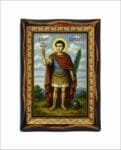
Saint Expeditus
Our company offers wholesale sales for Monasteries, Exhibitions, Ecclesiastical Stores, Gift Shops, and Merchants. We provide competitive pricing based on the quantities you order, ensuring the best possible offer to meet your needs.
For more details on our products and to receive personalized offers, please contact us directly. We are happy to discuss terms and provide the best solutions tailored to you.
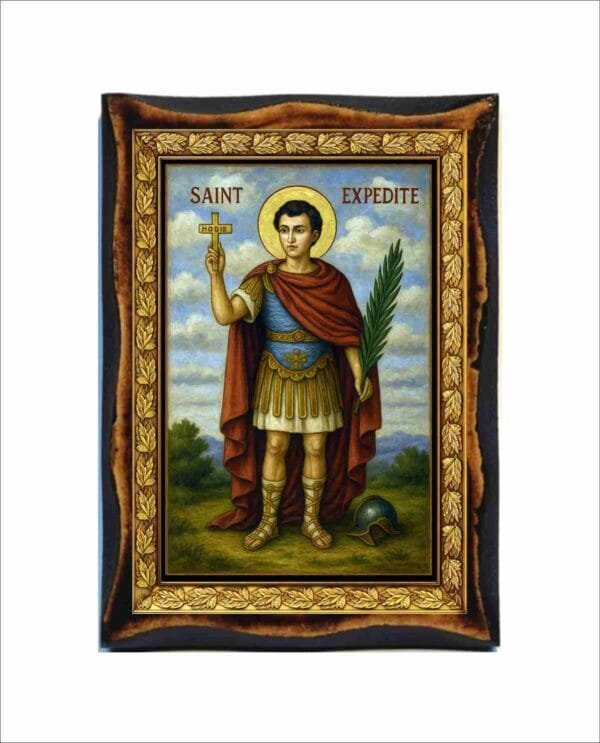
Saint Expedite – Espedito di Melitene – Expédit de Métilène – San Expedito – Santo Expedito – Święty Ekspedyt – Expedit
Dimensions: 11 x 8 cm – 4.33”x3.14”in , 15 x 11 cm – 5.9”x4.33”in , 21 x 15 cm – 8.3”x5.9”in , 27 x 21 cm – 10.6” X8.3”in – 42 x 32 cm – 16.5“x12.60”in
| Title | Range | Sale price |
|---|---|---|
| Total items | 5 - 10 | 15,20 € |
| Total items | 11 - 30 | 13,60 € |
| Total items | 31 - 60 | 12,00 € |
| Total items | 61 - 150 | 10,40 € |

Description
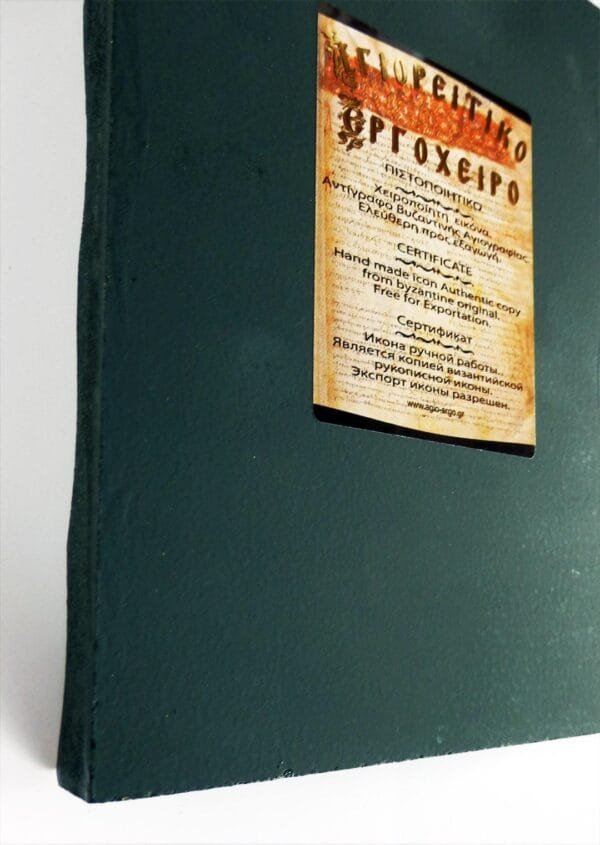
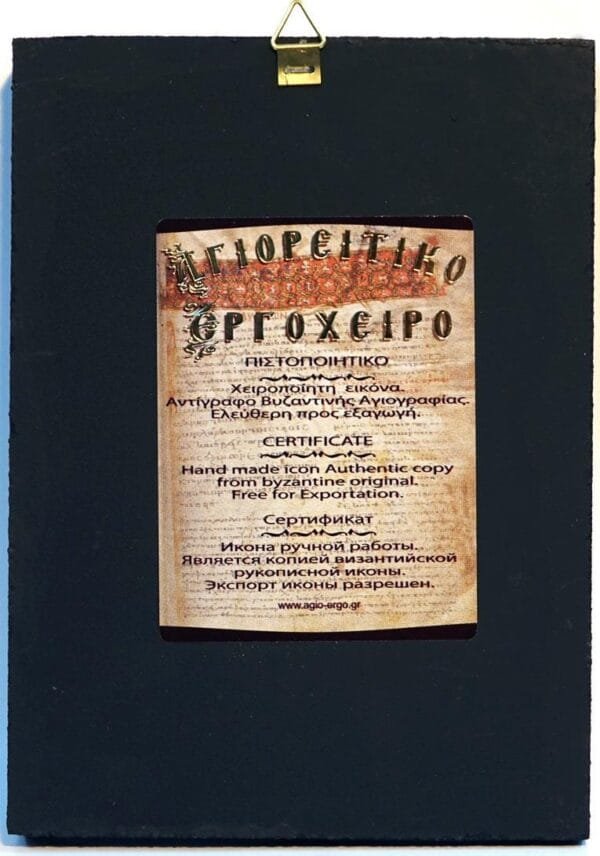
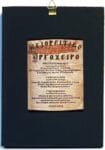
This Icon is a copy of the Hagiography (Holy Card Printing) that we have made in our Laboratory and we reserve the exclusive rights to reproduce these images, which are protected by copyright.
Expeditus (died 303) is said to have been a Roman centurion in Armenia who was martyred around April 303 in what is now Turkey, for converting to Christianity. Considered the patron saint of speedy cases, he is commemorated by the Roman Catholic Church on 19 April.Expeditus was probably born in Armenia. He was a Christian martyr, but not much else is known about him. Information concerning Expeditus is found in the Hieronymian Martyrology, where he appears as one of six Roman soldiers said to have been executed at Melitene during the Diocletian persecution. If he stationed at Melitene at the beginning of the fourth century, he would likely have been a member of the Legio XII Fulminata.
The earliest indication of devotion to St Expeditus comes only from the second half of the eighteenth century. He was mentioned briefly in 1675 in the Acta sanctorum volume for April. However, according to Delehaye, the word “Expeditus” is a misreading of “Elpidius”. The name “Expeditus” has provoked puns, so he has become the saint of rapidity. At first, he was invoked for urgent causes; he has since become the patron of dealers, sailors, students, and examinees; he is also implored for success in lawsuits.
According to tradition, Expeditus was a Roman centurion in Armenia who became a Christian and was beheaded during the Diocletian Persecution in AD 303. The day he decided to become a Christian, the Devil took the form of a crow (a snake in some versions of the legend) and told him to defer his conversion until the next day. Expeditus stamped on the bird and killed it, declaring, “I’ll be a Christian today!”
Expeditus was included in martyrologies in Italy before 1781. There was a tradition that Expeditus could be called upon to help settle overly long legal cases. His feast of April 19 is widely celebrated. Expedite is venerated in Europe and strongly in Latin America. Brazil has ceremonies in São Paulo and crowds attending ceremonies to mark his April 19 feast day can reach in the hundreds of thousands.
Many stories circulated about the origin of the cultus of Expeditus. One states that it began when a package marked expedite (meaning ‘be ready’ or alternately ‘loosen’) arrived with unidentified relics or statues. The recipients assumed that the statuary or relics belonged to an Expeditus, and so veneration began. Such an account is set in France in 1781. A case containing the relics of a saint, who was formerly buried in the Denfert-Rochereau catacombs of Paris, was delivered at a convent in the city. The senders had written expédit on the case, to ensure fast delivery of the remains. The nuns assumed that “Expédit” was the name of a martyr, and prayed for his intercession. When their prayers were answered, veneration spread rapidly through France and on to other Roman Catholic countries.
Another version of the story takes place in New Orleans, Louisiana, which was strongly influenced by French Catholic culture through the colonial period. This account says that Our Lady of Guadalupe Chapel (New Orleans) received a large shipment of statues of various saints, and that one case lacked an identifying label. It was labeled “Expedite” (Expédit in French), so the residents assumed that must be the saint’s name. Expédit still figures prominently in Louisiana Creole folklore and is revered through amulets, flowers, candles, and intercessory prayers.
Additional Information
| Weight | N/A |
|---|---|
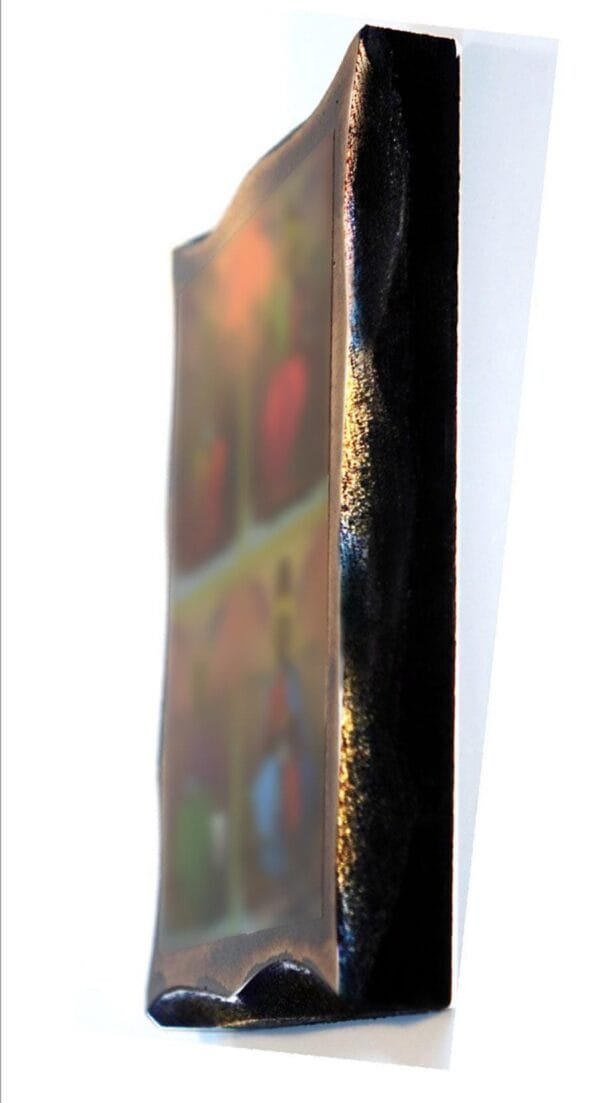
| Dimensions | 11cm x 8cm x 1.2cm, 15cm x 11cm x 1.7cm, 21cm x 15cm x 1.7cm, 27cm x 21cm x 1.7cm, 42cm x 32cm x 1.7cm |
There are no question found.




Rating & Review
There are no reviews yet.