

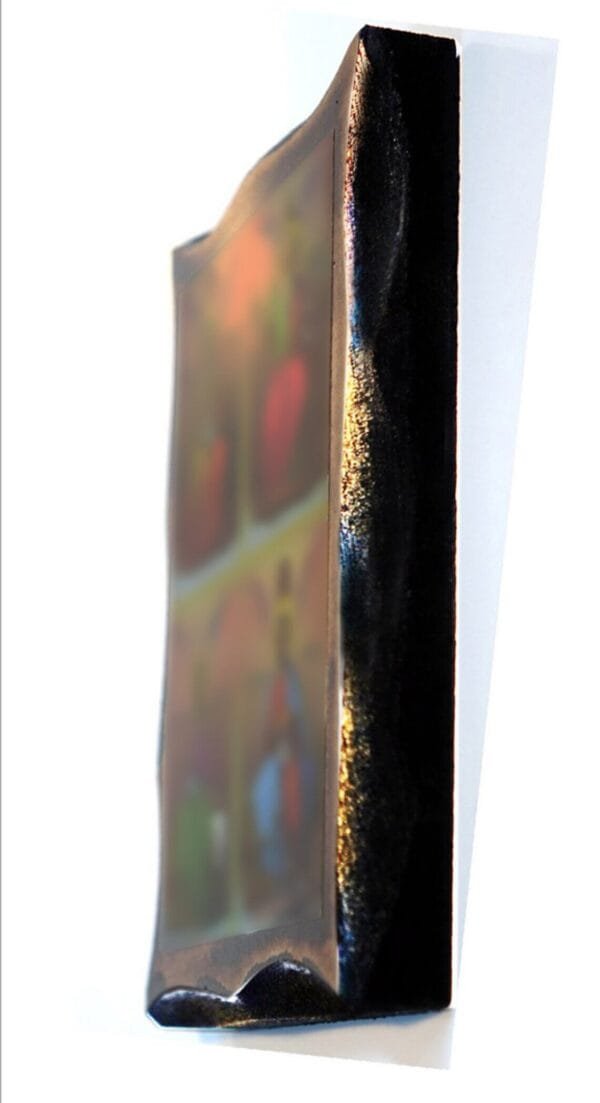
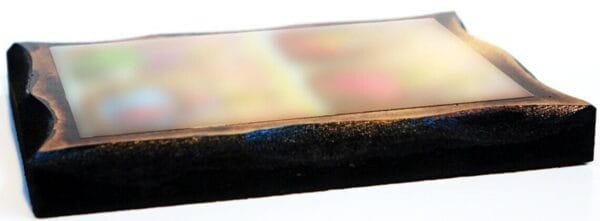

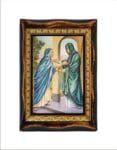

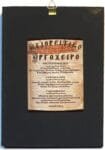
Visitation
Our company offers wholesale sales for Monasteries, Exhibitions, Ecclesiastical Stores, Gift Shops, and Merchants. We provide competitive pricing based on the quantities you order, ensuring the best possible offer to meet your needs.
For more details on our products and to receive personalized offers, please contact us directly. We are happy to discuss terms and provide the best solutions tailored to you.
Visitazione della Beata Vergine Maria – Visitation de la Vierge Marie – Mariä Heimsuchung – Visitación de María – Visitação
Dimensions: 11 x 8 cm – 4.33”x3.14”in , 15 x 11 cm – 5.9”x4.33”in , 21 x 15 cm – 8.3”x5.9”in , 27 x 21 cm – 10.6” X8.3”in – 42 x 32 cm – 16.5“x12.60”in
| Title | Range | Sale price |
|---|---|---|
| Total items | 5 - 10 | 15,20 € |
| Total items | 11 - 30 | 13,60 € |
| Total items | 31 - 60 | 12,00 € |
| Total items | 61 - 150 | 10,40 € |

Description
This Icon is a copy of the Hagiography (Holy Card Printing) that we have made in our Laboratory and we reserve the exclusive rights to reproduce these images, which are protected by copyright.
In Christianity, the Visitation is the visit of St. Mary, who was pregnant with Jesus, to St. Elizabeth, who was pregnant with John the Baptist, as recorded in the Gospel of Luke, Luke 1:39–56.
It is also the name of a Christian feast day commemorating this visit, celebrated on 31 May in Western Christianity (2 July in calendars of the 1263–1969 period, and in the modern regional calendar of some countries whose bishops’ conferences wanted to retain the original date, notably Germany and Slovakia) and 30 March in Eastern Christianity.
Mary visits her relative Elizabeth; they are both pregnant: Mary with Jesus, and Elizabeth with John the Baptist. Mary left Nazareth immediately after the Annunciation and went “into the hill country … into a city of Judah” (Luke 1:39) to attend to her cousin (Luke 1:36) Elizabeth. There are several possibilities as to exactly which city this was, including Hebron, south of Jerusalem, and Ein Karem. The journey from Nazareth to Hebron is about 130 kilometres (81 mi) in a direct line, probably up to half as far again by road, depending on the route taken. Elizabeth was in the sixth month before Mary came (Luke 1:36). Mary stayed three months, and most scholars hold she stayed for the birth of John. Given the prevailing cultural traditions and needs for security, it is probable that Joseph accompanied Mary to Judah then returned to Nazareth, and came again after three months to take his wife home. The apparition of the angel, mentioned in Matthew 1:19–25, may have taken place then to end the tormenting doubts of Joseph regarding Mary’s maternity.
In the Gospel of Luke, the author’s accounts of the Annunciation and Visitation are constructed using eight points of literary parallelism to compare Mary to the Ark of the Covenant.
Some Catholic commentators have maintained that the purpose of this visit was to bring divine grace to both Elizabeth and her unborn child. Even though he was still in his mother’s womb, John became aware of the presence of Christ, and leapt for joy as he was cleansed from original sin and filled with divine grace. Elizabeth also responded and recognised the presence of Jesus, and thus Mary exercised her function as mediatrix between God and man for the first time.
And she [Elizabeth] spoke out with a loud voice, and said, “Blessed [art] thou among women, and blessed [is] the fruit of thy womb. And whence [is] this to me, that the mother of my Lord should come to me? For, lo, as soon as the voice of thy salutation sounded in mine ears, the babe leaped in my womb for joy. And blessed [is] she that believed: for there shall be a performance of those things which were told her from the Lord.” (Luke 1:42–45)
In response to Elizabeth, Mary proclaims the Magnificat (My soul doth magnify the Lord) Luke 1:46–55.
The word “blessed” is rendered in Greek not by the word “makarios” but as “evlogimeni”, which is the feminine second person singular, used only this once in the New Testament. Its masculine third person singular counterpart “evlogimenos” is used only for Jesus and only on this occasion and when he was welcomed into Jerusalem on Palm Sunday with: “Blessed is he who comes in the name of the Lord”. The masculine/mixed gender third person plural “evlogimenoi” is used by Jesus only when referring to the righteous who are to be raised to life in the Last Judgement.
Additional Information
| Weight | N/A |
|---|---|
| Dimensions | 11cm x 8cm x 1.2cm, 15cm x 11cm x 1.7cm, 21cm x 15cm x 1.7cm, 27cm x 21cm x 1.7cm, 42cm x 32cm x 1.7cm |
There are no question found.






Rating & Review
There are no reviews yet.